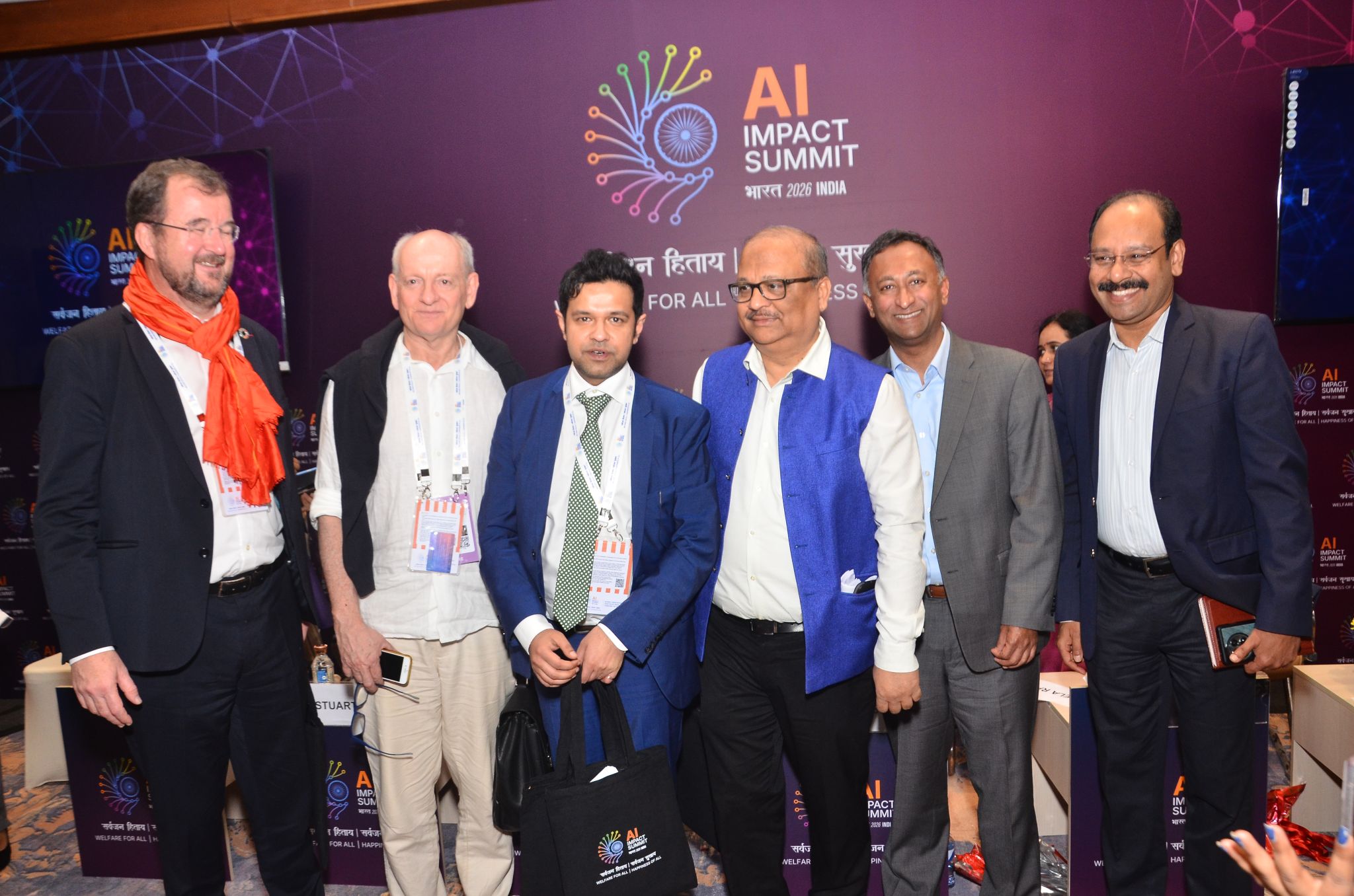
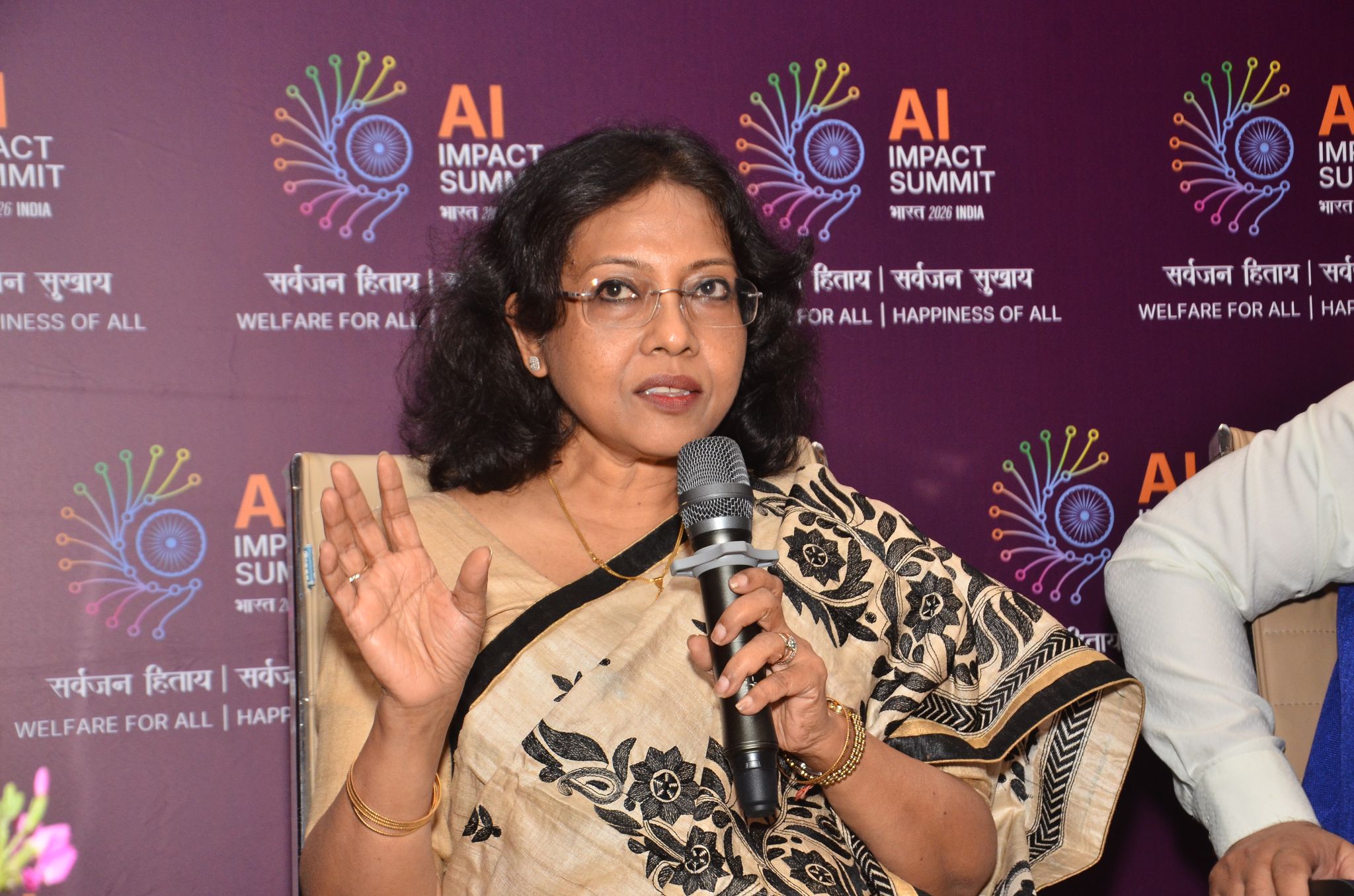
Few panels in recent memory brought together this caliber of thinkers to address the question that matters most for the global economy: can AI finally bridge the intelligence gap in the world's largest industry? At the India AI Impact Summit 2026 in New Delhi, that conversation happened. Taiyo.AI's CEO Dr. Saurabh Mishra moderated a landmark panel titled "Cognitive Infrastructure for Sustainable and Resilient Futures" at Bharat Mandapam, assembling global AI leaders, World Bank leadership, and top industrial and government executives to confront a critical mismatch: AI capabilities are accelerating and costs are collapsing, yet the world's most valuable infrastructure knowledge remains trapped in fragmented records and PDFs.
Read next The New Geopolitics: Why Infrastructure is the New Source of Global PowerInfrastructure is a $12 trillion industry. It deserves the best thinking available. This panel delivered it.
A World-Class Dialogue on Vertical AI
The panel brought together a genuinely extraordinary range of perspectives. Prof. Stuart Russell of UC Berkeley shared insights on human-compatible AI and the necessity of safety in physical systems. Bertrand Badré of Blue like an Orange discussed the financial imperatives for sustainable capital and AI-driven risk assessment. Suparna Singh of L&T highlighted the industry need for skilling the workforce and embedding AI into university curricula. Mihir Kumar Singh from the Government of Bihar grounded the technology in the public-sector reality of industrial development. G. Sayeed Choudhury of Carnegie Mellon explored the digital infrastructure requirements for open standards and institutional memory. And Susanth Kurunthil of Infopark Kerala outlined the vision for AI-native urban ecosystems and Global Capability Centres.
The Core Themes: Risk, Resilience, and Responsibility
As Saurabh noted during the session, "If AI is the 'new infrastructure,' then infrastructure is the new geopolitics." The conversation moved well beyond the tools themselves to address the hard, urgent questions facing modern leaders. The panel confronted why the AEC ecosystem requires domain-specific intelligence rather than general models — in infrastructure, there is no luxury of "moving fast and breaking things." It grappled with the problem of collective deskilling: how to ensure that as AI begins to run the machines of civilization, we maintain the human expertise necessary to manage them. Democratic accountability entered the discussion, too — who bears the cost when AI fails in public systems? And beneath it all ran a deeper question about whose standards and data systems will guide the next generation of ports, power grids, and metros.
From New Delhi to the World
The Summit was a powerful demonstration of India's genuine leadership in shaping the AI age. From Kerala's AI-native urban planning to Bihar's industrial growth, the proactive role of state governments is becoming a cornerstone of the national ecosystem. These aren't just ideas on a stage — they are policy choices already reshaping the country's trajectory.
Read next Bringing Vertical AI to the World Stage at the India AI Impact Expo 2026At Taiyo.AI, we believe the governance choices made now will define growth and trust for decades to come. By building the intelligence layer that turns grounded data into workflows for planning and procurement, we are helping societies decide not just what to build, but how to build it for a resilient future. We are grateful to the Ministry of Electronics and Information Technology (MeitY) and the Digital India Corporation for hosting and facilitating such a vital dialogue.
Watch the Panel
Follow us on LinkedIn for more updates.