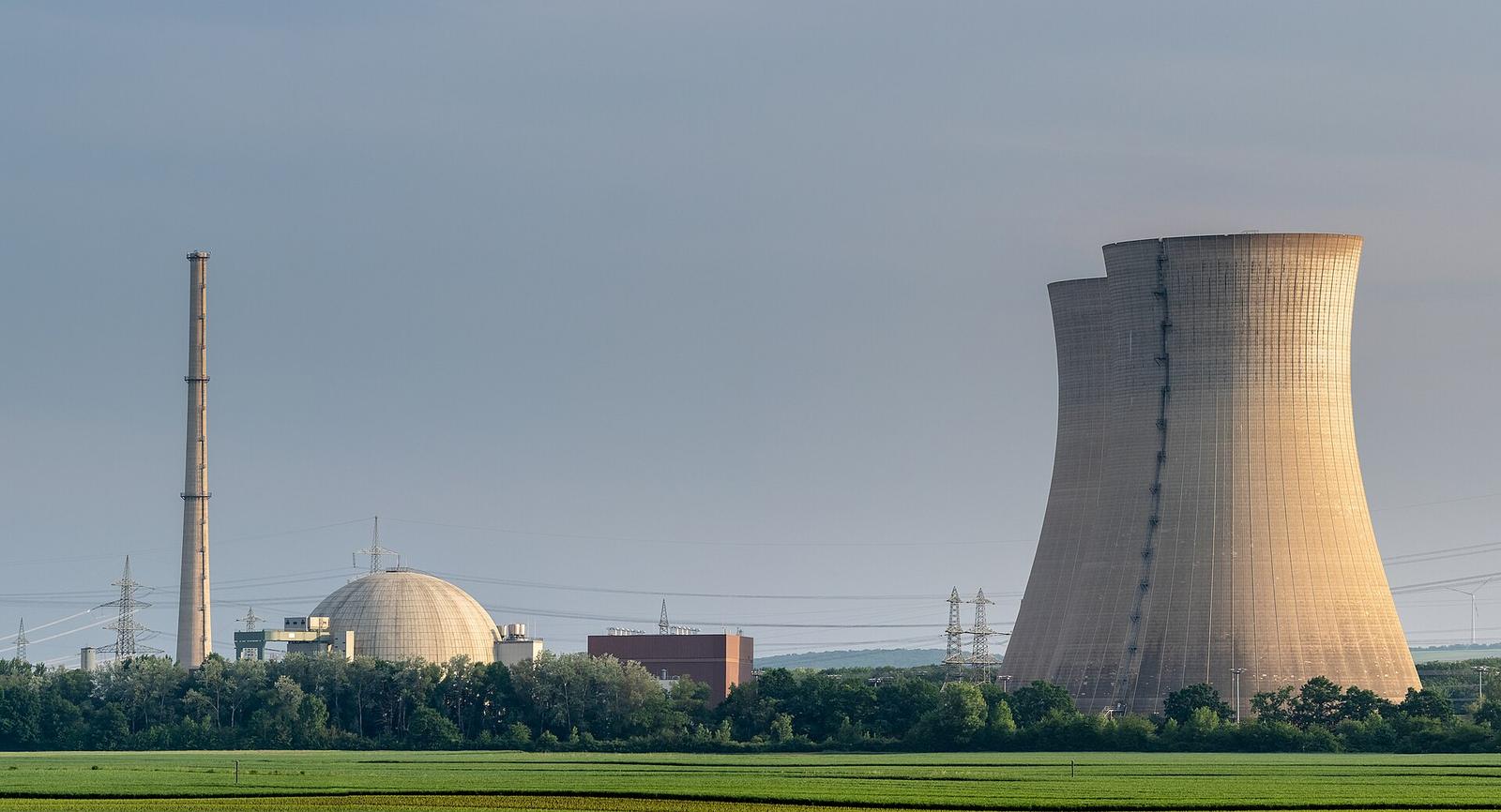
The Nuclear Regulatory Commission has cleared four reactors at a chemical plant on the Texas Gulf Coast, the first construction permit of its kind in almost 60 years.
On November 9, 2026, the NRC issued a construction permit for the Long Mott project: four Xe-100 advanced small modular reactors at Dow's UCC Seadrift Operations in Calhoun County, Texas. X-energy designs the reactors; Dow hosts them and uses the power. Together they call it the first NRC permit for a pebble-bed high-temperature gas-cooled reactor, and the first for a nuclear plant built to serve an industrial site, as the coverage reports.
Key takeaways
- The NRC cleared the permit in about 18 months, roughly half its generic construction-permit timeline.
- The project pairs about 700 million private rounds that are distinct, not the same money counted twice.
- Fluor runs project management, while Toyo Tanso and Curtiss-Wright supply reactor components.
- Texas's nuclear records span laboratory, medical and supply work as well as power reactors, and most sit ahead of construction.
Four Reactors, 320 MW, and a 60-Year First
Each Xe-100 produces about 80 megawatts. Four of them give Seadrift a 320-MW output, supplying heat and power to Dow's petrochemical complex, and X-energy expects the units to run for 60 years.
The review moved faster than the norm. The NRC completed it in about 18 months, roughly half its generic construction-permit timeline, after docketing the application in 2025. X-energy attributed the speed to thorough regulatory work and congressionally mandated reforms.
DOE's $2.15bn Put the Bet on Firm Ground
What sets Long Mott apart is how much of it is already paid for. The project has drawn roughly 1 billion X-energy has already drawn, according to the American Nuclear Society. The district congressional office points to $2.675 billion it helped secure for DOE's Advanced Reactor Demonstration Program, the funding vehicle behind the work.
Private money followed the public money. Our records show two separate $700 million raises: a financing advised by J.P. Morgan Securities and Moelis & Company, and a Series D for X-energy led by Amazon. They are not the same round, and not the same money counted twice. The same records name Dow and X-energy as co-developers, Fluor on project management and engineering, Toyo Tanso on graphite core components, and Curtiss-Wright on prototype reactor manufacturing. Reaching the regulator with this much capital already committed is the exception, not the rule.
Fermi America Leads the Rest of the Texas Field
Fermi America holds the deepest bench in Texas's nuclear records, and the reason is scope. Its advanced-reactor campus bundles reactor, fuel and site work into a single programme, so it generates far more records than rivals still assembling a first application. That makes Fermi the anchor account for any supplier sizing the state.
Fermi America Leads the Texas Nuclear Field on 61 Records
Nuclear records in Texas by sponsor
Data
| Records | |
|---|---|
| Fermi America | 61 |
| Last Energy | 26 |
| Texas A&M University System | 13 |
| X-energy | 10 |
| Blue Energy | 9 |
| enCore Energy | 9 |
Source: Taiyo records, nuclear sector in Texas
Fermi's 61 records are not 61 reactors. They are the filings, contracts and procurement lines around one campus, which is why it leads: it is further along its paperwork than sponsors with a single live entry. For a contractor, one engaged sponsor with dozens of active records is worth more than several with one each.
Most of Texas's nuclear records sit ahead of construction, and the completed bucket is dominated by procurement for laboratory and medical-nuclear supplies rather than power reactors.
Three Nuclear Records Await Every One Under Construction in Texas
Nuclear records in Texas by stage
Data
| Records | |
|---|---|
| Prospective | 619 |
| Under construction | 176 |
Source: Taiyo records, nuclear sector in Texas
That stage split is the shape of an early market, but read it with care: these counts cover all nuclear-related work in the state, spanning laboratory, medical, supply and power projects, not power reactors alone. Today's activity is still mostly non-power.
The Permit Is the Easy Part as Building Slips into the 2030s
A construction permit does not let anyone switch the reactors on. The NRC states that the permit does not authorise operation; Dow and X-energy must file a separate operating-licence application. A preliminary investment decision is not expected until 2027, full-scale construction follows the final investment decision, and first delivery is targeted for the early 2030s.
That long runway is where the real work sits. An 18-month review proves the regulator can move quickly; it does not prove the supply chain can. Xe-100 hardware, TRISO fuel and graphite components are still being industrialised, which is why the component and prototype contracts matter more than the headline permit for the firms behind them.
Three signals will show whether Seadrift becomes a template or a one-off. First, whether Dow's 2027 preliminary investment decision converts to a final one, since construction hangs on it. Second, whether the DOE demonstration dollars that anchor Seadrift extend to the next industrial site. Third, whether the EPC and component suppliers on Long Mott win repeat awards, the clearest sign that a nuclear supply chain for industrial power is forming rather than a single bespoke build.
Methodology
We count nuclear-related records in Texas from the Taiyo canvas, covering projects, tenders and procurement across the sector. Each record is staged as Prospective, meaning announced, planned or in preparation; under construction, meaning works have started; or completed and concluded. The counts include all nuclear-related work in the state, so laboratory, medical and supply records sit alongside power-reactor records.
Run your own question on the projects, sponsors and suppliers behind stories like this in ConstructChat at https://taiyo.ai.
How these numbers were produced
Every figure above is a count of records in the Taiyo Data Mesh, returned by one of the queries below on Nov 12, 2026. Counts are records as held in the Data Mesh, not deduplicated projects, and statuses are as recorded at query time. Contract and budget values are not used: summed across sources they mix currencies and include outliers, so they are not reliable as totals.
| Query | Filters | Records |
|---|---|---|
| Records by status | Sector: Nuclear · Country: USA, Texas | 1,684 |
Follow us on LinkedIn for more updates.