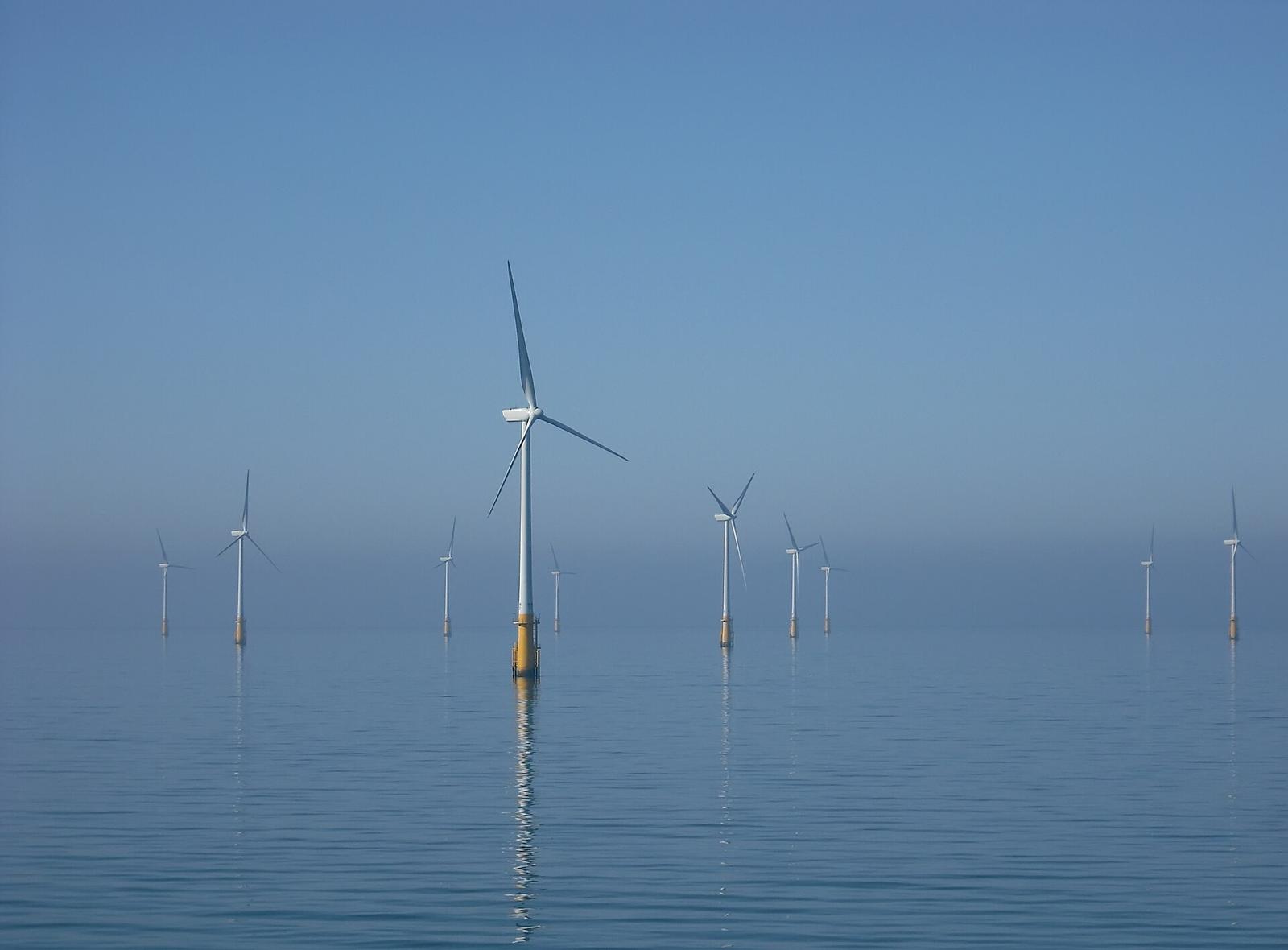
An ENGIE-led consortium reached financial close this month on the 900 MW Gulf of Suez 3 wind farm, which the deal coverage describes as set to become ENGIE's largest onshore wind asset. The news names the sponsors, the lenders and the turbine supplier. It does not answer the question a bid director or an analyst asks next: who else is chasing wind in Egypt, and how crowded has the field become? Our records answer it with counts.
Key takeaways
- 176 Egypt wind projects are announced or in preparation, against 70 already under construction.
- The Gulf of Suez 3 consortium pairs ENGIE, Aeolus SAS and Orascom Construction on 900 MW, backed by lenders including JBIC, PROPARCO and Société Générale.
- ChatGPT is built as a general-purpose assistant, and its web search returns web sources rather than project records.
- ConstructChat returns the same question as linked project and tender records, with sponsors, lenders and contractors attached.
A Single Deal Inside a 304-Project Market
A headline gives you one project. The field around it is where a bid decision is made. The ENGIE close is a single 900 MW asset, tied to a 25-year power purchase agreement with the Egyptian Electricity Transmission Company. Around it sit hundreds of records the news article never touches. As of November 2026, Taiyo holds 304 wind project records for Egypt.
Put the same question to ConstructChat and it returns the stages. Egypt's wind shelf splits into 176 prospective projects, meaning announced or in preparation, then 70 under construction, 56 closed, and 2 in a failure status. The weight sits with projects that are announced but not yet built.
Egypt's wind pipeline leans on projects not yet built
Egypt wind projects by stage
Data
| Projects | |
|---|---|
| Prospective | 176 |
| Under construction | 70 |
| Closed | 56 |
| Failure | 2 |
Source: Taiyo records, wind projects in Egypt
ACWA Power Leads a Crowded Contractor Bench
Ownership is broader than any single consortium. Multilateral lenders anchor the sponsor field: the World Bank Group appears on 27 Egypt wind records, the European Bank for Reconstruction and Development on 26, and the International Finance Corporation on 25.
On the delivery side, ACWA Power sits at the top of the contractor bench with 19 records, ahead of Orascom Construction on 8. The partner in this week's deal is also one of the busiest builders in the market.
ACWA Power Leads the Egypt Wind Contractor Bench
Contractors and developers on Egypt wind projects
Data
| Projects | |
|---|---|
| ACWA Power | 19 |
| Orascom Construction | 8 |
| Scatec | 7 |
| ENGIE Group | 5 |
| PowerChina | 3 |
Source: Taiyo records, contractors and developers on wind projects in Egypt
The records also resolve the deal itself. ENGIE appears on 5 wind projects in Egypt, and across 22 records in our wider Egypt coverage. Among them is the Onshore Wind Farm Project in Egypt by ENGIE-led Consortium. The site itself appears in the data as the Ras Shokeir Wind Power Project. Every name in the news story becomes a record a reader can open, with the sponsor, the stage and the location attached.
ChatGPT Searches the Web; ConstructChat Opens the Record
ChatGPT is a general-purpose assistant, and its own page says so, presenting it as a way to "Get answers, find inspiration and be more productive" and built to answer questions across subjects. Its search documentation states that ChatGPT "can search the web when needed to answer questions that benefit from up-to-date information", and the search announcement says it returns "fast, timely answers with links to relevant web sources". Search is conditional: it runs automatically when a user's prompt benefits from current information, or the user triggers it manually by clicking the search icon. That design is strong for breadth.
ConstructChat is narrower by design. It runs on the Taiyo data mesh of infrastructure projects, tenders and the organisations behind them. It filters project and tender records by sector, country, stage and record type, opens individual records, and breaks a market down by status, sponsor, lender and contractor. It looks up organisations and their associated projects and contacts, reads risk data and risk sources, and searches the web and news to add context.
| Dimension | ChatGPT | ConstructChat |
|---|---|---|
| What the answer rests on | Web sources, returned on demand | Infrastructure project and tender records |
| Project-level records with links | Not its design | Yes, each record opens by link |
| Tender and organisation coverage | General web pages | Tender records and organisation lookup |
| Fit for infrastructure workflows | Broad, cross-domain | Built for sector, stage and sponsor cuts |
What Changes When the Answer Needs Records
A news article gives you the ENGIE close. A records layer gives you the field it sits in, and the field is what a bid, an investment or a market-entry decision turns on. The names inside the ENGIE deal, ENGIE and Orascom, recur across Egypt's wind dataset, and Orascom sits among the busiest contractors in it. The difference between the two assistants is not speed or fluency. It is what the answer rests on: structured records you can open and filter, or web pages you cannot.
Run your own question about the Gulf of Suez project, its sponsors or the wider Egypt wind pipeline in ConstructChat at https://taiyo.ai, and open the records behind the answer.
Methodology
Figures are Taiyo record counts, drawn within Taiyo Canvas coverage. Prospective means announced, planned or in preparation, not yet under construction. Under construction means works have started. Closed means completed or concluded. Failure means cancelled, suspended or stalled. Counts are as of November 2026, and project statuses change over time.
Follow us on LinkedIn for more updates.