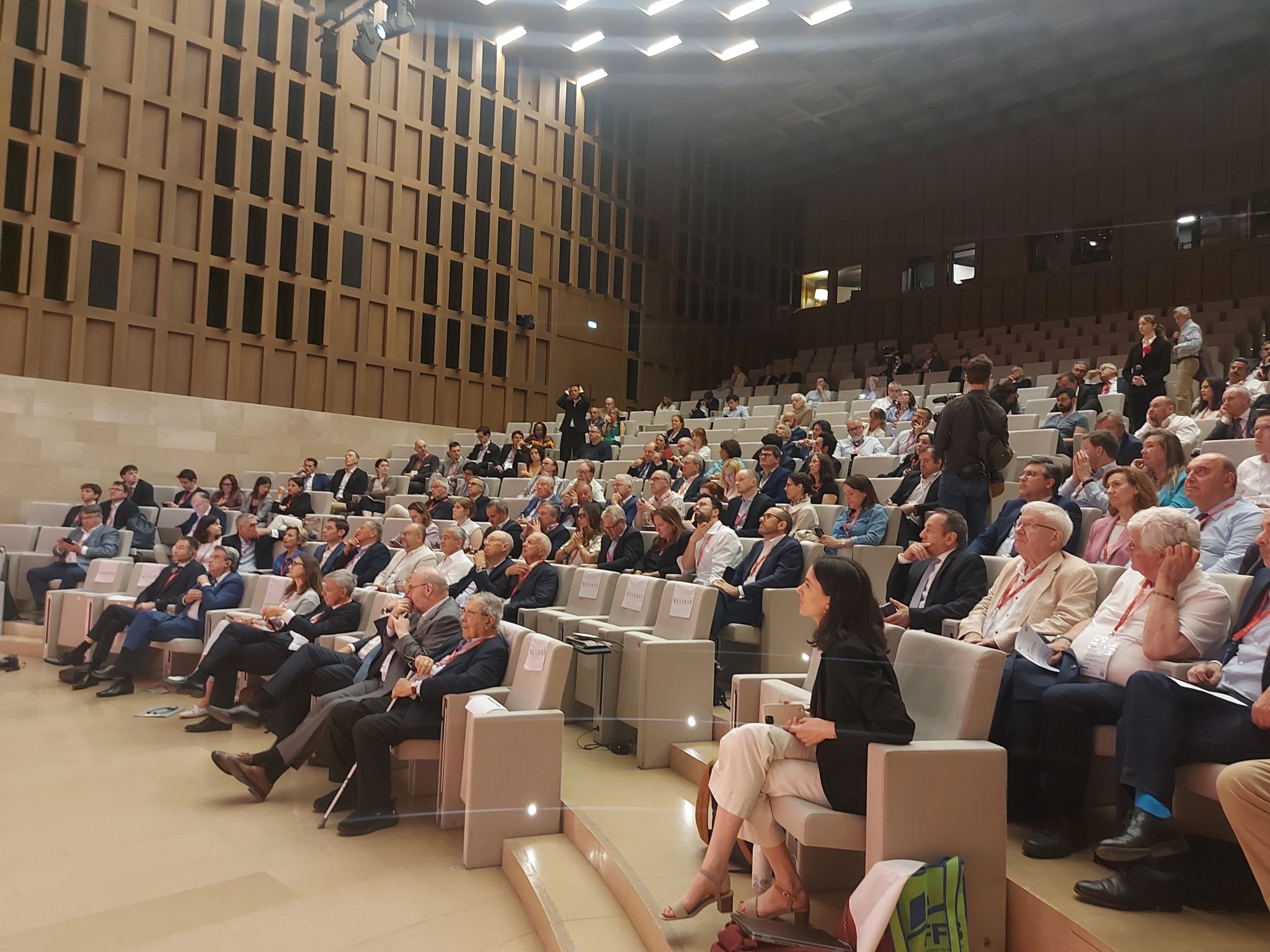
The Institut de France is not where the construction industry usually gathers. Its gilded dome and stone façade facing the Seine belong to the world of the sciences and letters, not scaffolding and site plans. On 29 May 2026, FIEC, the European Construction Industry Federation, chose it as the setting for its Annual Conference, and the choice said something about the moment: Europe's construction sector is taking seriously what digital transformation actually means for the built world.
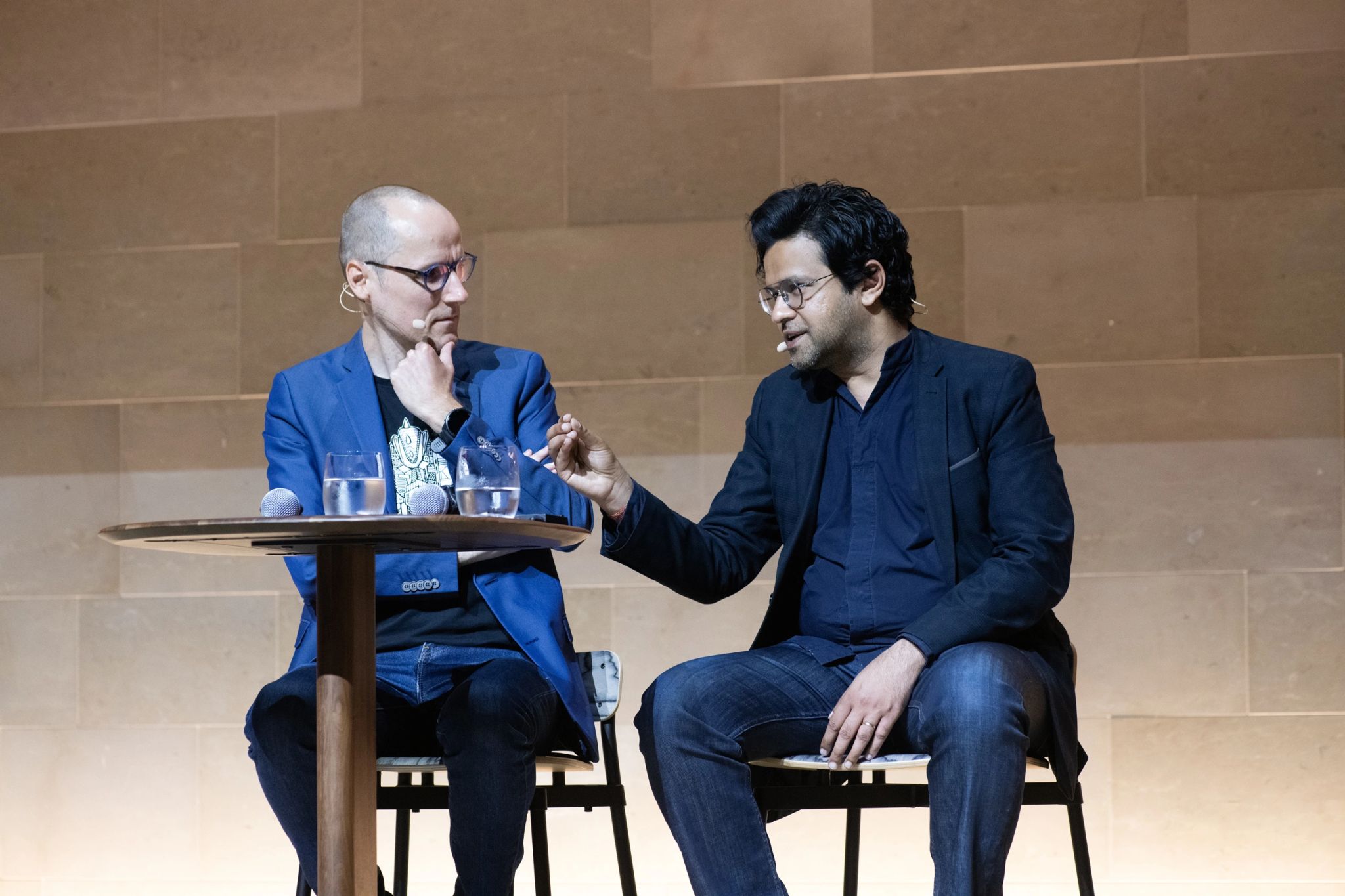
Read next Infrastructure as Geopolitics: Saurabh Mishra at the IPFA European Forum in AmsterdamSaurabh Mishra, Founder and CEO of Taiyo.AI, was invited to close the conference with a fireside chat on innovation in action. The conversation was moderated by tech journalist Anthony Morel.
The Reframe That Opened the Room
Saurabh began by stepping outside the usual AI conversation. "AI is the new infrastructure," he said. "Infrastructure is the new geopolitics, because whoever shapes the decision systems increasingly shapes the physical world." The race, he argued, is not simply over who builds roads and bridges. It is over who controls the intelligence that decides how those roads and bridges get designed, procured, and built.
Read next The New Geopolitics: Why Infrastructure is the New Source of Global PowerThat framing landed differently in a room of construction executives than it might have elsewhere. These are the people who build the physical world. The idea that the decisions shaping their industry are themselves becoming infrastructure, and that those systems are still largely unbuilt, gave the conversation its stakes.
What Cognitive Infrastructure Actually Means
From that opening, Saurabh introduced the concept at the centre of Taiyo.AI's work. "We spent centuries building physical infrastructure," he told the audience. "The next decade will be about building cognitive infrastructure." Not AI tools bolted onto existing workflows, but the intelligence layer that connects institutional memory, standards, expertise, and decision-making into something that can be put to work at the moment it is needed.
He made a point that surprised many in the room. "The biggest transformation in construction may not happen on the construction site. It may happen before construction even begins." In a sector where a single early decision shapes years of physical work, the value of better judgment upstream is enormous. As he put it, in the physical world reliability matters more than raw intelligence.
The Workforce Urgency
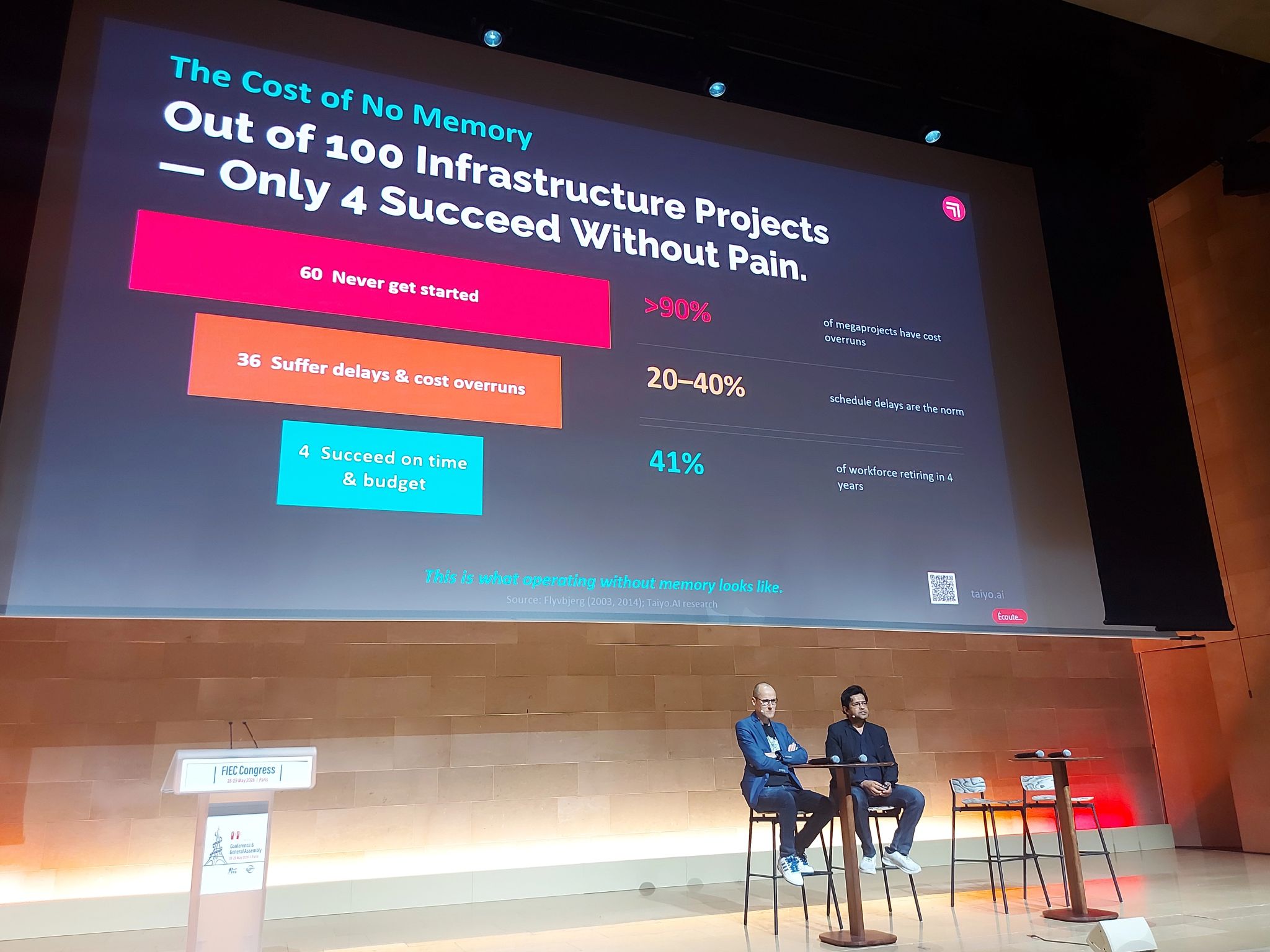
The most concrete moment of the session came when Saurabh raised the workforce shift already underway. "Nearly 40% of the construction workforce is expected to retire this decade." The instinct in the industry has been to treat this as a labour problem. He reframed it as a knowledge problem.
The real risk is not the number of workers who leave. It is the expertise they carry with them. Decades of hard-won judgment about how things go wrong, what specifications mean in practice, how to read a site, sits inside the heads of the people who are retiring. Cognitive infrastructure is the answer to that: a system that preserves expertise and puts it to work for the people who come next, rather than allowing it to disappear with the generation that built it.
What Europe Can Own
Saurabh closed on a note aimed directly at the room. Europe may not win the race to build foundation models. But it can own something that matters more to this industry: the operating systems of the built environment. That advantage does not go to whoever has the largest model. It goes to whoever turns the standards, memory, and domain expertise of European construction into systems that practitioners can genuinely trust on work that has to stand for a century.
We are grateful to FIEC for the invitation and for a conversation that took these questions as seriously as the industry deserves. The work of building cognitive infrastructure for construction is just beginning, and Paris was a reminder of how much is at stake.
Follow us on LinkedIn for more updates.